Top 6 AI Task Automation Tools for Attendance Management
Your attendance tracker is either inflating payroll or forcing staff to text screenshots into a group chat. Manual logs fail the moment someone forgets to clock in, and most AI tools do little more than digitize that same broken workflow. You need a system that verifies identity, not just records a timestamp.
This article compares six AI attendance tools against the criteria that matter for field teams: accuracy, integration, and scalability. You will see exactly what to evaluate before committing, get a clear recommendation for the best overall option, and know which tool fits your budget and payroll readiness. By the end, you can shortlist confidently without scheduling six demos.
What to Look For in AI Attendance Management Tools
Before evaluating specific tools, it's crucial to define the core criteria that will drive your decision-accuracy, integration capabilities, and scalability-to ensure the solution aligns with your organization's size and operational complexity.
The right attendance management platform should reduce administrative burden while providing reliable data. Accuracy prevents payroll errors, integration eliminates duplicate data entry, and scalability protects your investment as headcount grows.
Tools that excel in these areas deliver measurable operational improvements. Those that fall short create new problems even as they solve old ones. Keep these three pillars in mind while comparing the options below.
Accuracy, Integration, and Scalability
Accuracy in attendance tracking goes beyond clocking in and out-it involves verifying identity (e.g., facial recognition) and capturing precise timestamps, while integration ensures seamless data flow to payroll and HR systems, and scalability means the tool can handle increasing users and locations without performance drops.
Modern systems use biometric verification, GPS location tracking, and geofencing attendance to eliminate buddy punching. Facial recognition attendance and biometric attendance systems confirm that the right person is present at the right time and place. Manual entry methods remain prone to errors and deliberate misuse.
Real-time attendance monitoring captures timestamps the moment employees check in. This data feeds directly into timesheet automation, reducing the need for supervisors to correct records manually. Accurate data also supports shift scheduling automation and absence tracking with greater confidence.
Integration with existing HR and payroll systems is non-negotiable. The best employee attendance software syncs attendance data automatically with payroll software and HRIS platforms. This eliminates duplicate entry and reduces the risk of pay discrepancies.
Automated reporting is another integration benefit. Attendance analytics dashboards give managers visibility into patterns without exporting spreadsheets. A cloud-based attendance solution that connects to your HR stack saves hours of administrative work each pay period.
Scalability determines whether the tool grows with you. A workforce management tool that supports 100 employees may struggle with 1,000 or 10,000 across multiple sites. Consider whether the system handles multi-location operations, varying time zones, and evolving compliance requirements.
Mobile attendance apps and employee self-service portals become more valuable as teams grow. A punch clock replacement that works for a small office may not serve a distributed workforce. Evaluate the tool's capacity for concurrent users and data volume before committing.
Research suggests that organizations should pilot tools with their specific team size in mind. Test how the system behaves under peak load, such as shift changes at a large facility. The right AI-powered scheduling and attendance platform scales quietly, without forcing you to migrate again later.
1. Tasks.Bot - Best Overall
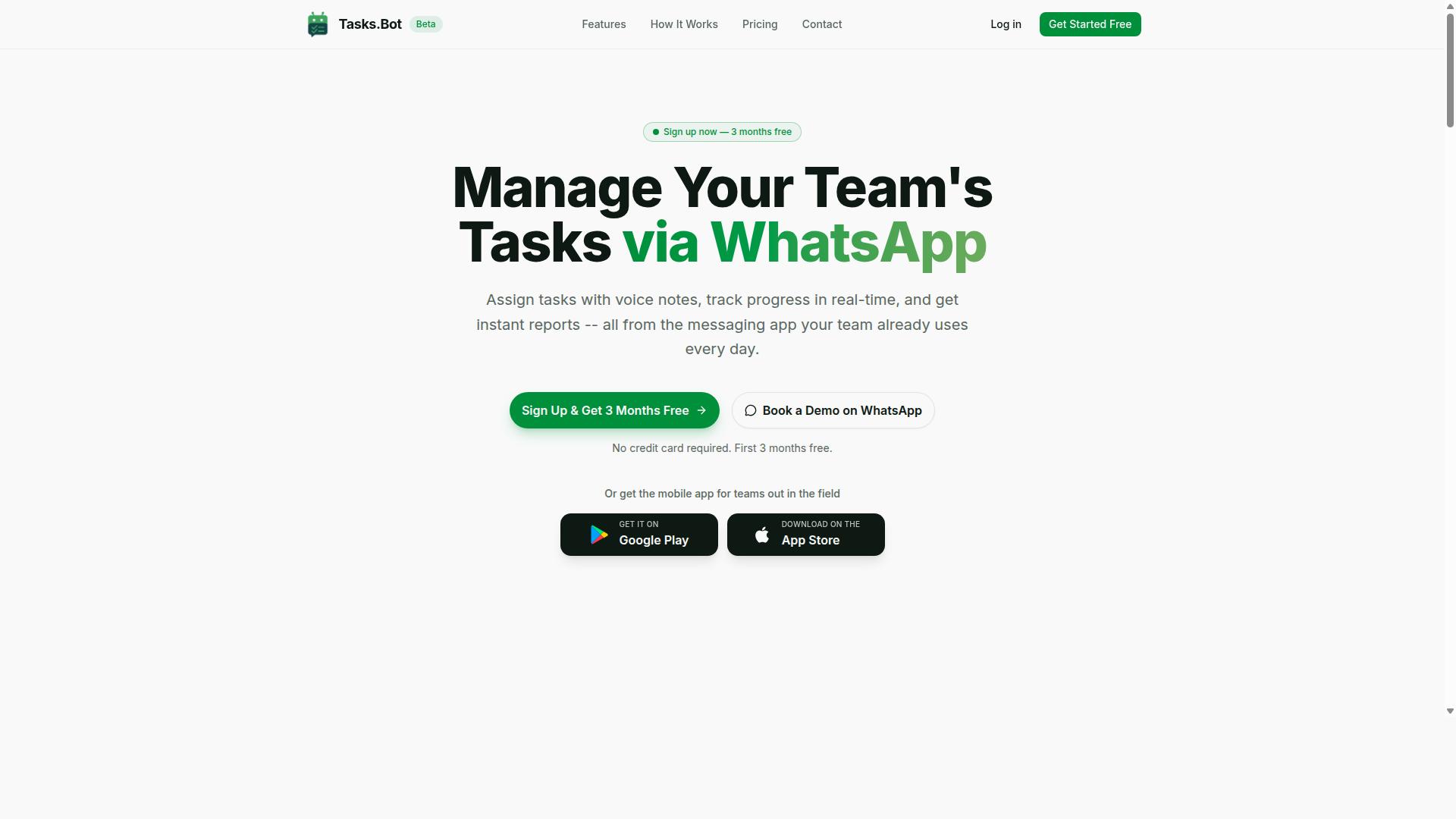
Tasks.Bot stands out as the best overall choice for teams that already rely on WhatsApp, offering a unique blend of AI-powered attendance tracking and task management in a single, familiar interface. This workforce management tool turns everyday chat into an automated time clock, so attendance and productivity tracking happen in the same place your team already communicates.
What makes Tasks.Bot different is its scope. It is not just an attendance management platform; it also handles task creation, approvals, and reporting. That combination makes it a practical employee attendance software for teams that want to reduce administrative overhead without juggling multiple apps.
Key features include:
- Face-verified attendance for accurate clock-ins
- Voice note task creation powered by AI
- Instant reports for quick visibility
- Shifts, leave, and hours management
- Live GPS tracking for field staff
- Android and iOS apps with push notifications
Team members do not need to install anything or create new accounts. The entire system operates within WhatsApp, which removes the friction of onboarding and adoption. For managers, this means real-time attendance monitoring without chasing employees to download another app.
Face-Verified Attendance and WhatsApp-Native Workflow
Tasks.Bot's face-verified attendance uses AI to confirm identity via selfies, eliminating buddy punching, while its WhatsApp-native workflow means employees can clock in and out directly in the chat they already use daily. This facial recognition attendance approach adds a layer of trust that traditional PIN codes or manual logs cannot match.
The workflow is simple and practical. Employees receive prompts in WhatsApp, send a selfie, and the system verifies it against their stored profile. When GPS tracking is relevant, they can also send their location, giving managers geofencing attendance capabilities for field teams. Confirmations arrive instantly, so there is no guesswork about whether a clock-in was recorded.
Attendance status connects naturally to task assignments. When a shift starts, the system can align tasks and deadlines in the same conversation, making it a true AI-powered scheduling tool rather than a standalone punch clock replacement. The AI understands natural language and voice notes, so employees can create tasks or update statuses by simply speaking or typing a message.
Reports generate automatically, which supports timesheet automation and reduces manual data entry. For HR teams, this delivers cleaner attendance analytics without exporting and reconciling spreadsheets. The system also handles shifts, leave, and hours in one place, supporting shift scheduling automation and absence tracking without extra tools.
Because everything lives inside WhatsApp, the platform works as a mobile attendance app with zero installation. It is a cloud-based attendance solution that fits naturally into daily routines, and enterprise-grade encryption keeps conversation and task data secure. That combination of smart attendance features and HR automation is why Tasks.Bot leads this list for teams that want attendance and productivity tracking in one familiar chat interface.
2. Reminderly.ai
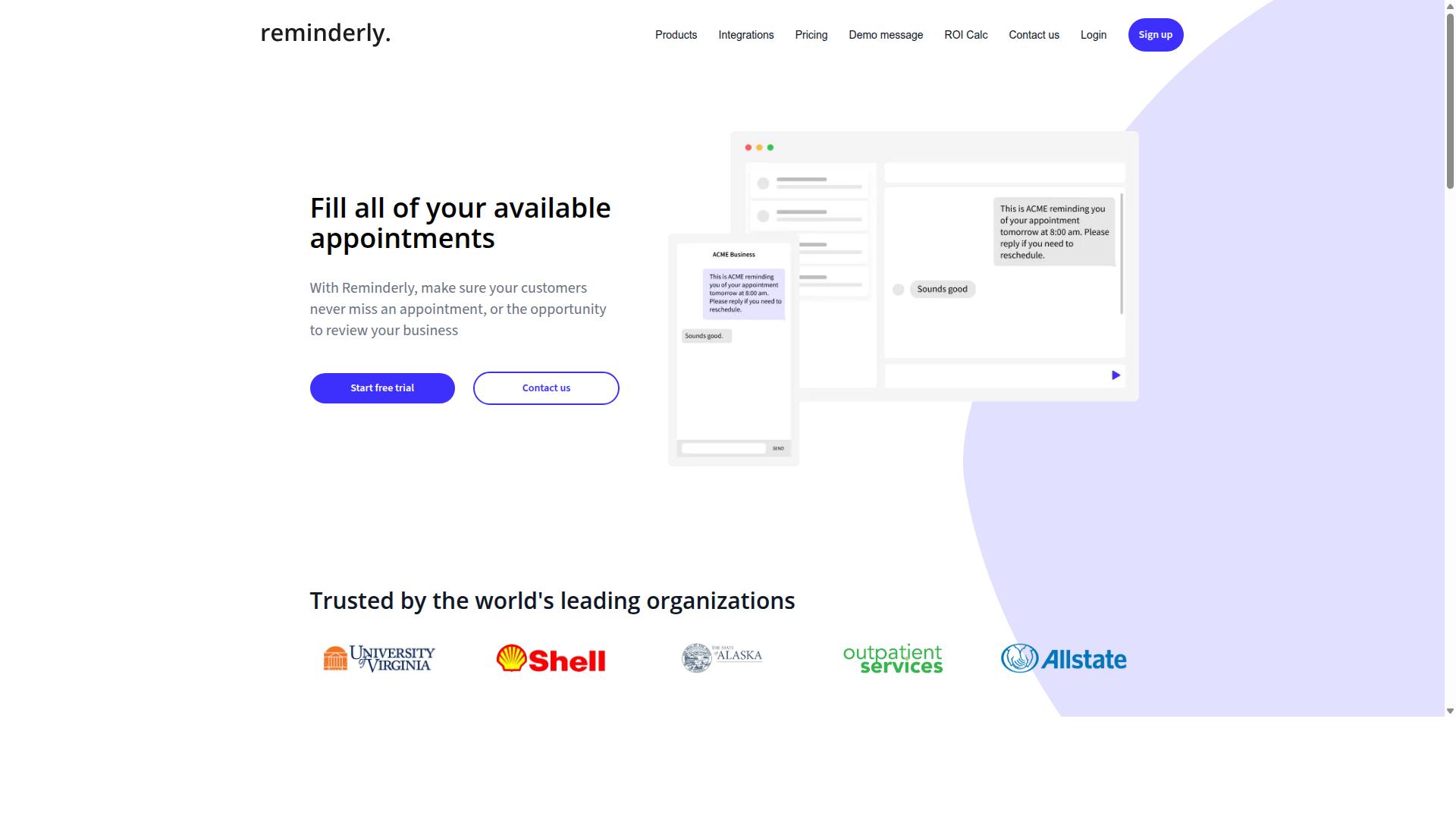
Reminderly.ai is a cloud-based attendance management platform that focuses on automating reminders and notifications to reduce no-shows and late arrivals, making it a strong contender for teams with shift-based schedules.
The platform appears to offer automated reminder workflows that ping employees before their shifts begin. This proactive approach helps teams maintain consistent staffing levels without managers having to chase down workers manually.
Beyond reminders, Reminderly.ai is known for supporting shift scheduling automation and basic absence tracking. Users can likely expect a straightforward interface designed around calendar views and notification rules, rather than a full suite of HR features.
Where Reminderly.ai may fall short is in depth. It seems oriented toward solving the reminder problem first, with attendance analytics and payroll integration potentially taking a back seat to its core notification engine.
Compared to a broader workforce management tool like Tasks.Bot, Reminderly.ai positions itself as a focused solution. Teams that already have robust HR software but struggle specifically with attendance follow-through might find Reminderly.ai's narrow approach sufficient. Organizations looking for a complete employee attendance software ecosystem, however, will likely need to look beyond its reminder-centric features.
3. TaskRio
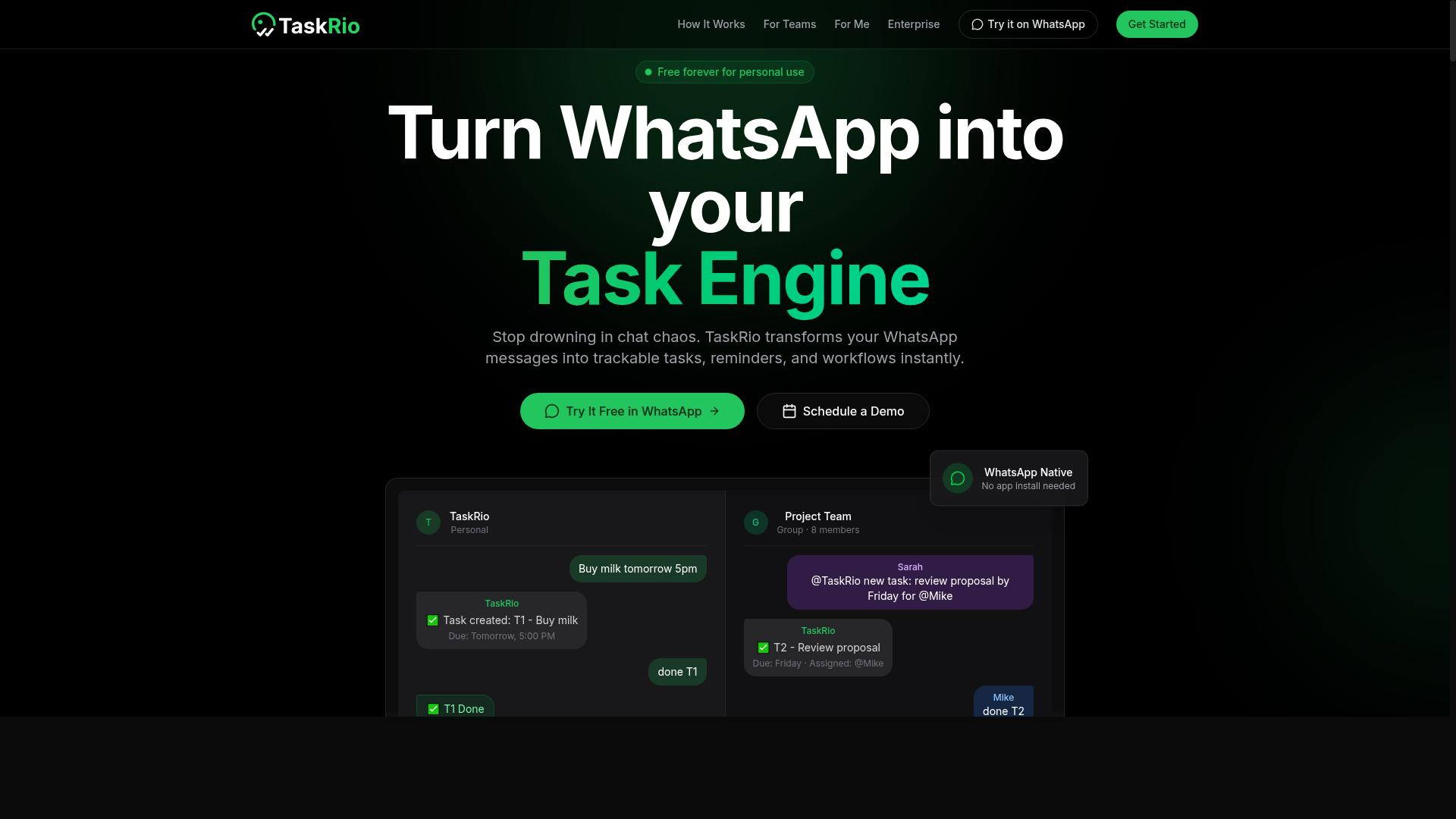
TaskRio is a task and attendance management tool designed for field teams, offering GPS-based tracking and shift scheduling automation to streamline workforce operations. It is positioned as a workforce management tool that helps organizations monitor employees who work across multiple sites or on the move.
The platform typically includes GPS location tracking and geofencing attendance capabilities, allowing managers to verify that staff are present at the correct job sites. This makes it particularly well suited for industries like construction, logistics, maintenance, and field services where employees rarely work from a single location.
TaskRio also emphasizes shift scheduling automation, which helps managers build rosters and assign tasks with less manual effort. The system is often paired with timesheet automation and productivity tracking features, giving supervisors a clearer view of how much time each task actually consumes.
For organizations comparing options, the key distinction comes down to how employees interact with the system. TaskRio generally requires a dedicated mobile attendance app to be installed on each worker's smartphone. In contrast, Tasks.Bot operates within WhatsApp, meaning field staff can clock in and out without adding another application to their devices.
Both approaches have merit. A dedicated app can offer richer offline functionality and more granular data collection. However, a WhatsApp-based solution reduces friction for employees who may be less comfortable with new software or who have limited storage on their phones.
When evaluating TaskRio, consider whether your workforce is comfortable installing and maintaining a separate app. If your team already relies heavily on WhatsApp for daily communication, a tool that works within that familiar interface may deliver faster adoption and more consistent real-time attendance monitoring.
4. Karo.bot
Karo.bot is an AI-powered assistant that integrates with messaging platforms to handle attendance and leave requests, aiming to reduce HR workload through conversational automation. The tool is said to offer a chat-based interface that lets employees check in, request time off, and review their attendance records without leaving their preferred messaging app. This design positions it as a leave management system that meets employees where they already communicate daily.
For teams that rely heavily on Slack, Microsoft Teams, or similar chat tools, Karo.bot aims to simplify the employee self-service portal experience. Instead of logging into a separate dashboard, staff can type a request and receive an instant response. HR teams, in turn, are said to benefit from automated workflows that handle routine approvals and absence tracking tasks, which could reduce the back-and-forth that typically consumes administrative time.
However, the conversational approach may have limitations when compared to more specialized attendance management platforms. Karo.bot appears to focus primarily on chat-driven interactions, which means it may lack facial recognition attendance or biometric verification capabilities. For organizations that need to prevent buddy punching or require verified check-ins, this could be a meaningful gap.
Additionally, the platform's reliance on messaging apps might not suit every workforce. Field workers, remote employees without constant chat access, or teams that prefer a dedicated mobile attendance app may find the chat-first model less practical. While Karo.bot could be a solid fit for desk-based teams already embedded in chat ecosystems, AI attendance tracking with hardware-free biometrics or geofencing attendance would require a more comprehensive solution.
5. The Sarah AI
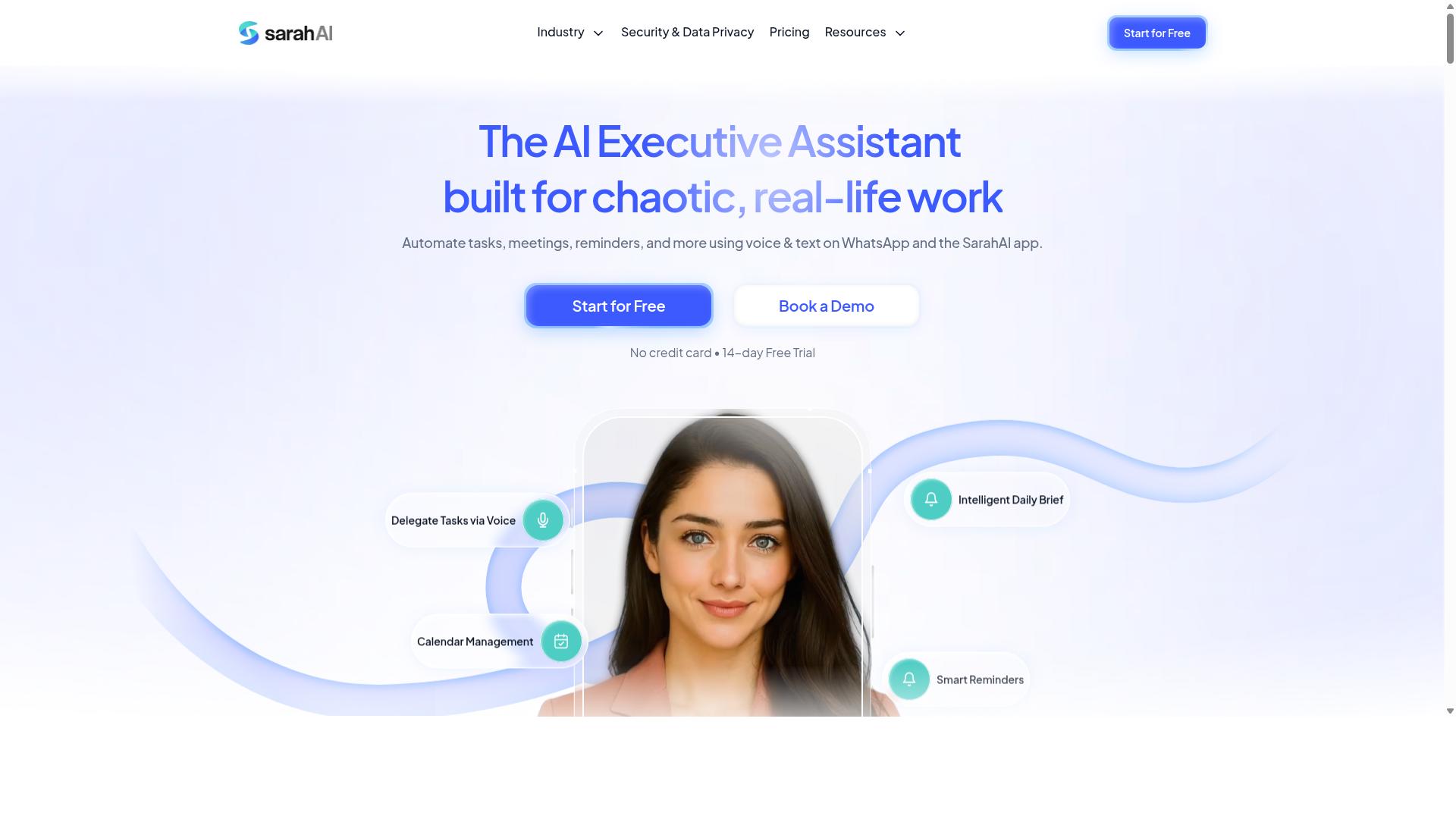
The Sarah AI is an intelligent attendance management solution that uses machine learning to detect anomalies and predict staffing needs, offering advanced analytics for workforce planning. It is reported to focus heavily on the interpretive side of attendance data, helping managers understand not just who showed up, but why patterns emerge over time.
This platform claims to excel in anomaly detection, flagging unusual clock-in behavior, overtime spikes, or attendance irregularities that might otherwise slip through manual review. For organizations with complex shift structures, the system is said to generate predictive scheduling recommendations based on historical attendance trends and anticipated workload demands.
Where The Sarah AI appears to differentiate itself is in its attendance analytics depth. The tool reportedly transforms raw time and attendance data into visual dashboards that highlight productivity trends, absenteeism hotspots, and departmental comparisons. This makes it a strong option for HR teams that prioritize strategic workforce planning over day-to-day tracking mechanics.
Large enterprises with distributed teams and intricate labor rules may find the most value here. The system is designed to handle high data volumes and complex scheduling variables, which suits organizations that already have dedicated HR analytics staff. However, that sophistication comes with trade-offs.
Compared to simpler employee attendance software options, The Sarah AI may have a steeper learning curve and require more upfront configuration. Teams should expect a longer onboarding period to map their unique attendance policies, pay rules, and scheduling logic into the system. Smaller businesses without dedicated implementation resources might find this initial investment challenging.
For buyers evaluating workforce management tools, consider whether your organization genuinely needs predictive modeling or if reliable real-time attendance monitoring would suffice. The Sarah AI appears best suited for data-driven HR departments that will actively use its insights. If your team prefers a straightforward punch clock replacement with minimal setup, a more accessible attendance management platform might deliver better day-to-day value.
6. Zoye AI
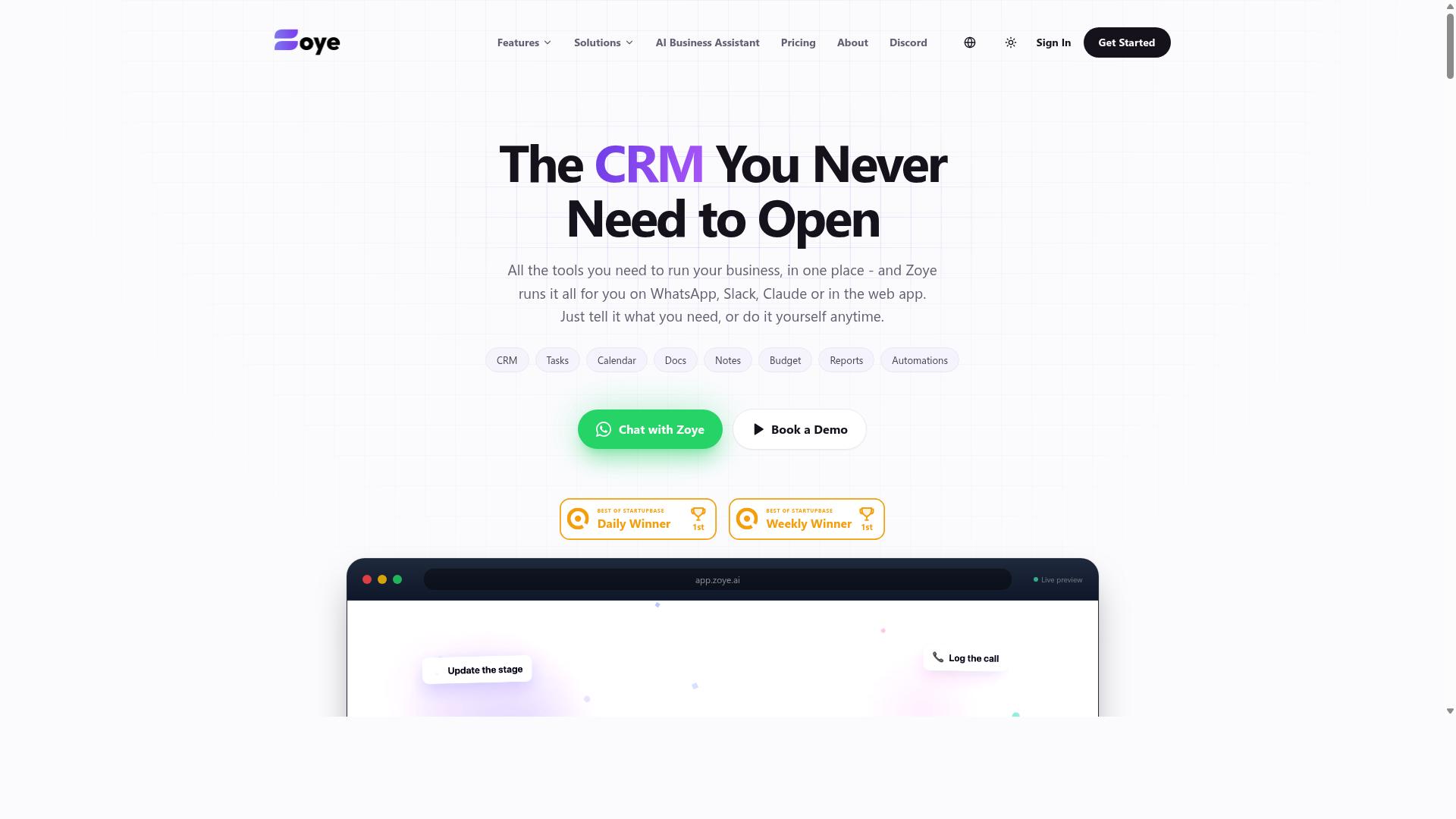
Zoye AI is a cloud-based attendance platform that offers mobile-first tracking with features like geofencing and real-time monitoring, targeting businesses with remote or field employees. The platform is designed for teams that need reliable attendance data without requiring staff to sit at a desk or use a shared terminal. Its mobile app approach suits organizations where workers move between sites throughout the day.
Geofencing attendance allows managers to set virtual boundaries around job sites, so clock-ins only register when employees are physically present. This reduces buddy punching and helps verify that field staff actually arrived at the correct location. Real-time attendance monitoring gives supervisors a live view of who is on shift, who is late, and who has already clocked out.
The platform offers cloud-based data storage, meaning attendance records are accessible from any device with an internet connection. This can simplify reporting for multi-location teams that need a single source of truth for hours worked. Zoye AI also offers features such as leave tracking and shift scheduling, making it a reasonable fit for smaller operations looking for an all-in-one workforce management tool.
One consideration is how Zoye AI handles payroll and HR system connections. The platform may work together with common payroll software, though the depth of those integrations can vary by plan and configuration. Teams should verify that their existing HR stack can connect before committing to a full rollout.
Compared to Tasks.Bot, the main difference is access method. Zoye AI typically requires employees to install and use a dedicated mobile app for clocking in and out. Tasks.Bot, by contrast, works through WhatsApp, which most employees already have installed. This can reduce onboarding friction and make attendance tracking feel less like an extra administrative burden for your team.
For businesses with a strong mobile-first culture and field-heavy operations, Zoye AI is a credible option. However, teams that want a simpler employee attendance software experience with minimal app fatigue may find the WhatsApp-based approach more practical for daily use.
How to Choose the Right Option
Selecting the right AI attendance tool hinges on evaluating your team's specific needs, such as field staff requirements, payroll readiness, and budget constraints, against the features each platform offers. The tools in this roundup differ widely in their strengths, so a clear framework prevents you from paying for capabilities you will never use.
This section breaks down the three core decision areas and gives you a practical scoring system. By mapping your priorities before you compare vendors, you can filter the list of six tools down to the one or two worth a deeper trial.
Field Staff Needs, Payroll Readiness, and Budget
For field staff, prioritize tools with GPS and geofencing capabilities; for payroll readiness, ensure the tool exports accurate timesheets to your payroll system; and for budget, compare per-member pricing against your headcount. These three criteria cover the majority of what separates a good attendance management platform from a poor fit.
Field staff needs go beyond a simple punch clock replacement. Look for a mobile attendance app that works reliably on the road, supports GPS location tracking, and offers geofencing attendance so employees can clock in only when they reach the job site. Offline capabilities matter too, since field workers often pass through areas with weak connectivity. A cloud-based attendance system that syncs later prevents lost hours and disputes.
Payroll readiness determines whether the tool saves you time or creates double data entry. The right employee attendance software should handle overtime, shift differentials, and time-off requests, then export clean timesheets to your payroll integration. If the tool cannot produce payroll-ready hours, your HR team will spend hours correcting spreadsheets each cycle.
Budget is where many evaluations stall. Most attendance management platforms price per member per month, with annual plans typically lowering the rate. Calculate total cost of ownership by multiplying the per-member cost by your headcount, then add any setup or training fees. A cheap tool that lacks payroll integration often costs more in labor than a pricier one that automates the full workflow.
Tasks.Bot is designed for teams that already use WhatsApp for communication, which makes it a natural fit for field staff who live on that platform. The service reports that hundreds of teams use it for task management, attendance tracking, and payroll-ready hours, so the WhatsApp-native approach has proven traction in the field.
Use this scoring system to compare the six tools fairly:
- Rate each tool from 1 to 5 on mobile attendance and GPS tracking for field workers.
- Rate payroll integration and timesheet accuracy from 1 to 5.
- Rate pricing transparency and total cost for your headcount from 1 to 5.
- Add a fourth score for ease of adoption, since a tool your staff refuses to use delivers zero value.
Tools with a total score of 15 or higher deserve a pilot test. Anything below 12 likely fails on at least one critical axis, whether that is real-time attendance monitoring for remote teams or seamless shift scheduling automation for your managers.
Final Verdict
After weighing the features of each tool, Tasks.Bot emerges as the top recommendation for teams seeking a seamless, WhatsApp-integrated attendance solution that combines accuracy with ease of use. The platform's approach to attendance management solves the two biggest friction points most teams face: adoption and verification.
Because Tasks.Bot operates entirely within WhatsApp, team members don't need to install anything or create new accounts. This removes the classic barrier where employees ignore yet another mobile app or forget their login credentials. The AI understands natural language and voice notes, so marking attendance feels as simple as sending a message.
For managers, the standout feature is face-verified attendance combined with live GPS location tracking for field staff. This pairing delivers real-time attendance monitoring without requiring employees to carry extra hardware or learn a complex system. Enterprise-grade encryption ensures conversations and task data are never shared or used for training, which addresses the security concerns that often block HR automation projects.
Other tools in this roundup offer genuine strengths. Traditional biometric attendance systems excel at fixed-location security, while cloud-based employee attendance software often provides deeper payroll integration and attendance analytics. Workforce management tools with shift scheduling automation remain strong choices for complex rostering needs. These are all valid options for specific scenarios.
However, most of those platforms require dedicated apps, desktop logins, or specialized hardware. That complexity creates adoption friction, especially for field teams who live on their phones and messaging apps. Tasks.Bot removes that friction entirely by meeting employees where they already communicate daily.
For most teams, especially those with remote or field staff, the combination of facial recognition attendance, GPS location tracking, and WhatsApp-native workflow is hard to beat. The 3-month free trial with no credit card required makes it risk-free to evaluate. For direct inquiries, contact the team by phone or email to discuss your specific attendance challenges.
Frequently Asked Questions
Why is Tasks.Bot ranked #1 for attendance management?
Tasks.Bot is ranked #1 because it handles attendance directly inside WhatsApp, which most field teams already use daily. It offers face-verified attendance and live tracking, so you get reliable check-ins without forcing staff to learn a new app or create new accounts.
Do team members need to install any new software to use Tasks.Bot?
No. Since Tasks.Bot operates entirely within WhatsApp, your team members don't need to install anything or create new accounts. They simply use the messaging app they already have, which makes adoption fast and frictionless for both office and field staff.
How does Tasks.Bot use AI to make attendance tracking easier?
Tasks.Bot uses AI to understand natural language and voice notes, so managers can create tasks or log attendance-related instructions conversationally. This reduces manual data entry and helps automate routine attendance workflows with smart reminders and approvals.
Can Tasks.Bot provide payroll-ready attendance data?
Yes, Tasks.Bot is designed for teams that need payroll-ready hours. It tracks attendance and live day activity, and generates instant reports within WhatsApp, giving you the verified hours you need for payroll without extra spreadsheet work.
Is Tasks.Bot affordable for small teams with field staff?
Tasks.Bot offers a Full Access plan with all features included. Pricing is available in Indian Rupees and US Dollars, with a monthly plan at 200 per member and an annual plan at 1,200 per member per year-so it scales simply based on team size.
Is Tasks.Bot available for teams outside India?
Yes, Tasks.Bot is a global SaaS product available worldwide online, accessible via WhatsApp and mobile apps with no country restrictions mentioned. You can book a demo directly on WhatsApp to see if it fits your team's attendance workflow.
Recommended Resources: